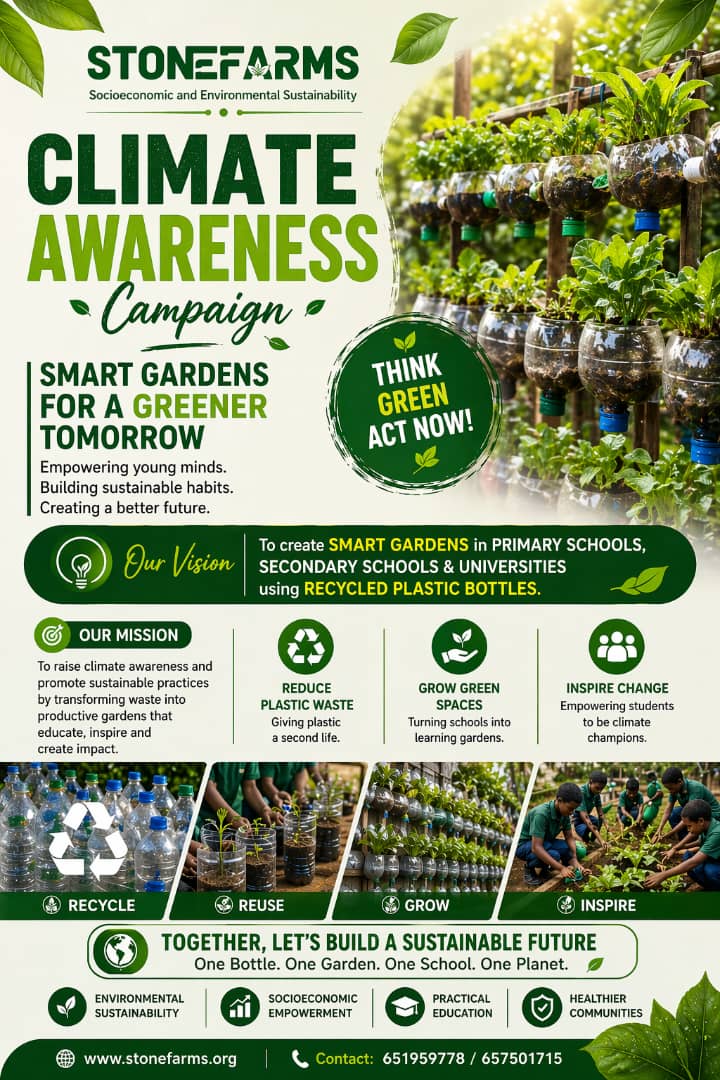
Introducing Our Climate Awareness Campaign: Smart Gardens Initiative
STONEFARMS launches a climate awareness campaign in Cameroon, introducing smart gardens in schools using recycled plastic bottles to promote sustainability and environmental education
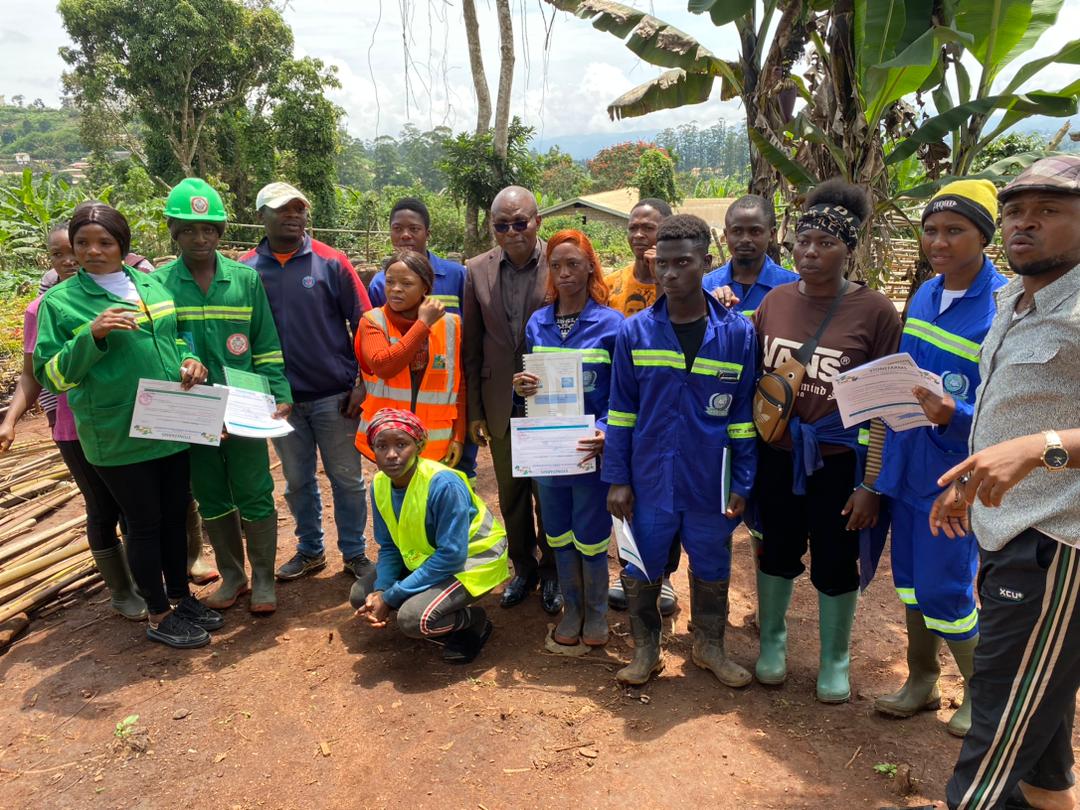
STONEFARMS has officially launched its Climate Awareness Campaign with a successful first activation at the Cameroon Baptist Convention Nursery, Primary and Secondary School, Bassosia Mission Station (Bakassa, West Region of Cameroon).
This milestone marks a significant step in our mission to promote socioeconomic and environmental sustainability through practical, community-driven solutions.
🌍 From Awareness to Action
The campaign brought together nursery pupils, primary school learners, and secondary school students in an engaging and interactive session focused on:
– Climate change and its global and local impact
– Environmental responsibility and sustainable living
– The importance of recycling and waste management
What made this initiative truly impactful was its hands-on approach — transforming knowledge into action.
♻️ Smart Gardens: Turning Waste into Opportunity
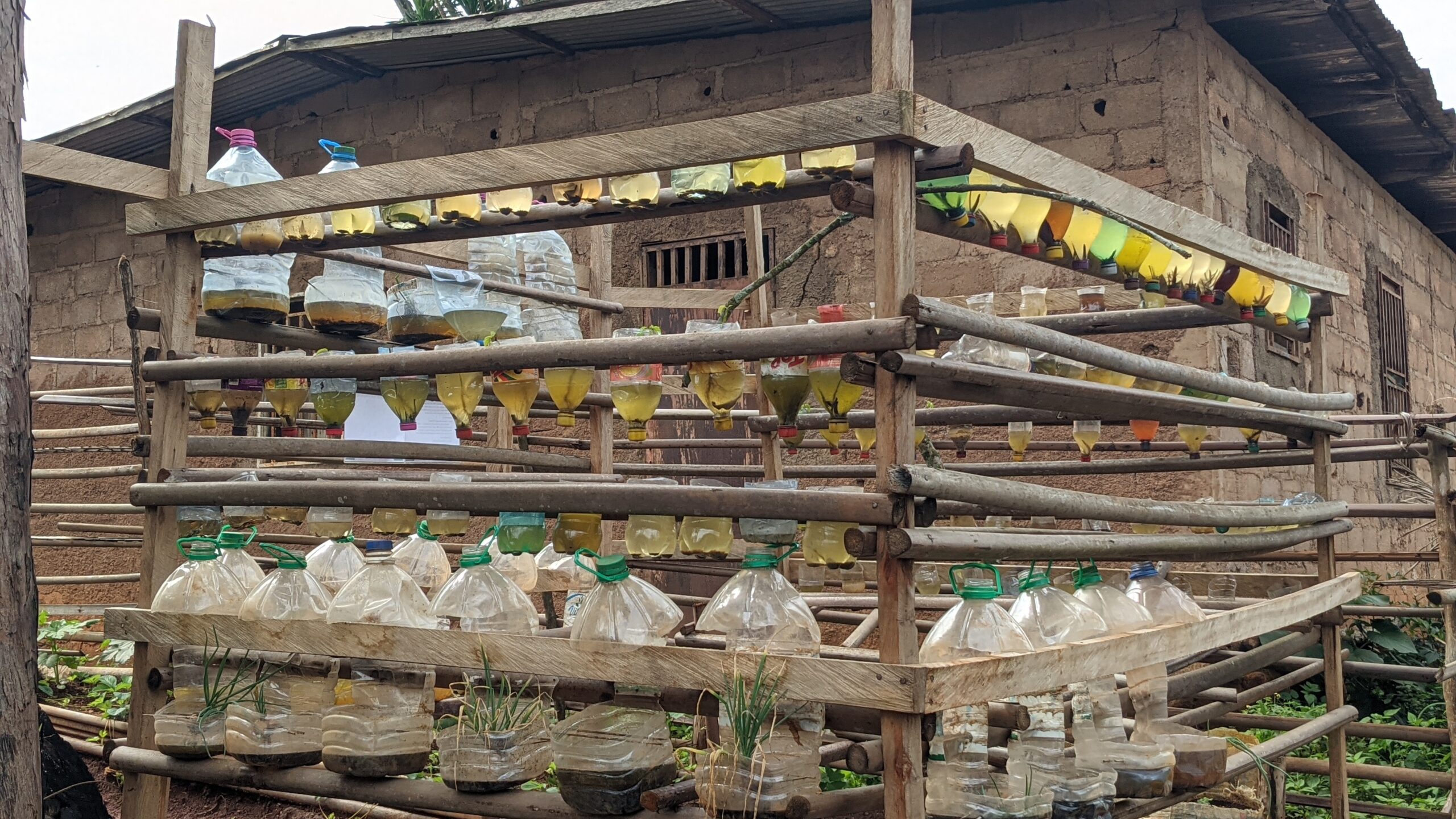
As part of the activation, Team STONEFARMS worked alongside students to design and build a Smart Garden using recycled plastic bottles.
The garden featured a variety of crops, including:
– Basil
– Parsley
– Celery
– Leek
– Hot pepper
– Red and green cabbage
This practical activity allowed students to experience sustainability first-hand, demonstrating how simple innovations can address environmental challenges while promoting food production.
🎯 Driving Sustainable Development Goals (SDGs)
This initiative directly contributes to several United Nations Sustainable Development Goals (SDGs):
– SDG 4 – Quality Education: Providing practical environmental education
– SDG 11 – Sustainable Cities and Communities: Promoting greener school environments
– SDG 12 – Responsible Consumption and Production: Encouraging recycling and waste reduction
– SDG 13 – Climate Action: Raising awareness and driving climate-conscious behavior
– SDG 2 – Zero Hunger: Supporting small-scale food production through school gardens
Through this campaign, STONEFARMS is actively contributing to building a more sustainable and resilient future.
🌱 Empowering the Next Generation
The enthusiasm and participation of the students highlighted the importance of early environmental education. By equipping young people with knowledge and practical skills, we are nurturing a generation that is aware, responsible, and solution-driven.
🤝 Partner With STONEFARMS
We invite schools, institutions, and development partners to collaborate with us in expanding this initiative across Cameroon and beyond.
Together, we can transform schools into centers of sustainability, innovation, and environmental leadership.
💡 One Bottle. One Garden. One School. One Plane
We are committed to advancing socioeconomic and environmental sustainability through practical, innovative solutions that create real impact.
We are proud to introduce our Climate Awareness Campaign, a forward-thinking initiative designed to educate, inspire, and empower students across primary schools, secondary schools, and universities.
🌍 What is the Smart Gardens Initiative?
Our Smart Gardens initiative focuses on transforming recycled plastic bottles into functional and sustainable gardens within school environments.
This initiative is built on a simple but powerful idea:
👉 Turn waste into opportunity while educating the next generation.
🎯 Our Goal
To create green, interactive learning spaces where students can:
Understand climate change and its impact
Learn environmental responsibility
Engage in hands-on sustainable practices
Develop a culture of innovation and care for the environment
♻️ Why It Matters
Plastic waste continues to be a growing environmental challenge. Through this campaign, we aim to:
Reduce plastic pollution in school communities
Promote recycling and reuse
Encourage climate-conscious behavior from a young age
🌱 From Awareness to Action
This campaign goes beyond awareness — it is about action and participation.
Students will not only learn but also build and maintain Smart Gardens, gaining practical experience that stays with them for life.
🤝 Partner With Us
We are inviting schools, institutions, and stakeholders to partner with us in implementing this initiative and building a greener future together.
💡 One Bottle. One Garden. One School. One Planet.
📞 Contact Us: 651959778 / 657501715Stay connected as we officially launch this campaign and begin transforming schools into centers of sustainability and innovation.

![PXL_20250606_090301732.PORTRAIT[1]](https://blogs.stonefarms.org/wp-content/uploads/2025/06/PXL_20250606_090301732.PORTRAIT1-scaled.jpg)
![PXL_20250606_091601596[1]](https://blogs.stonefarms.org/wp-content/uploads/2025/06/PXL_20250606_0916015961-scaled.jpg)
![PXL_20250606_091954415.PORTRAIT[1]](https://blogs.stonefarms.org/wp-content/uploads/2025/06/PXL_20250606_091954415.PORTRAIT1-scaled.jpg)
![PXL_20250606_085823954[1]](https://blogs.stonefarms.org/wp-content/uploads/2025/06/PXL_20250606_0858239541-scaled.jpg)
![PXL_20250606_090415432.PORTRAIT[1]](https://blogs.stonefarms.org/wp-content/uploads/2025/06/PXL_20250606_090415432.PORTRAIT1-scaled.jpg)
![PXL_20250618_131153120.PORTRAIT[1]](https://blogs.stonefarms.org/wp-content/uploads/2025/06/PXL_20250618_131153120.PORTRAIT1-scaled.jpg)
![PXL_20250618_131416855.PORTRAIT[1]](https://blogs.stonefarms.org/wp-content/uploads/2025/06/PXL_20250618_131416855.PORTRAIT1-scaled.jpg)
![PXL_20231108_113102475[1]](https://blogs.stonefarms.org/wp-content/uploads/2025/06/PXL_20231108_1131024751-scaled.jpg)
![PXL_20231108_113143326.PORTRAIT.ORIGINAL[1]](https://blogs.stonefarms.org/wp-content/uploads/2025/06/PXL_20231108_113143326.PORTRAIT.ORIGINAL1-scaled.jpg)
![IMG-20240420-WA0037-1[1]](https://blogs.stonefarms.org/wp-content/uploads/2025/06/IMG-20240420-WA0037-11.jpg)
![PXL_20231107_094811926.MP[1]](https://blogs.stonefarms.org/wp-content/uploads/2025/06/PXL_20231107_094811926.MP1_-scaled.jpg)
![PXL_20231107_101647853.PORTRAIT.ORIGINAL[1]](https://blogs.stonefarms.org/wp-content/uploads/2025/06/PXL_20231107_101647853.PORTRAIT.ORIGINAL1-scaled.jpg)
![PXL_20231110_145823540[1]](https://blogs.stonefarms.org/wp-content/uploads/2025/06/PXL_20231110_1458235401-scaled.jpg)
![PXL_20250606_085911309.PORTRAIT[1]](https://blogs.stonefarms.org/wp-content/uploads/2025/06/PXL_20250606_085911309.PORTRAIT1-768x432.jpg)
![PXL_20250606_085930280.PORTRAIT[2]](https://blogs.stonefarms.org/wp-content/uploads/2025/06/PXL_20250606_085930280.PORTRAIT2-768x432.jpg)