STONEFARMS Conducts Comprehensive Soil Assessment for Agricultural Development in Ntui, Cameroon
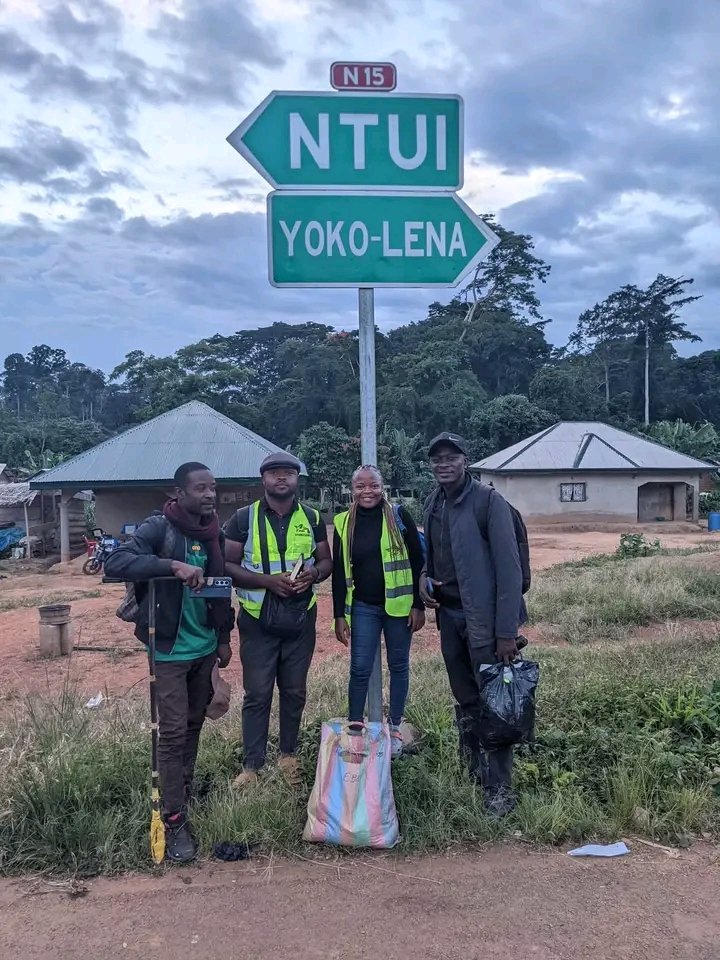
Turning Soil Intelligence into Better Agricultural Decisions | Ntui, Centre Region, Cameroon | 2026
Sustainable and productive agriculture begins with understanding the land.
As part of its commitment to promoting science-based, climate-smart and sustainable agricultural development, STONEFARMS recently conducted a comprehensive field soil assessment for JK Agrofarms in Ntui, Centre Region of Cameroon. The mission brought together a multidisciplinary technical team with expertise in pedochemistry, soil science, soil cartography, agroecology and environmental management. The objective was to generate reliable field-level information that can support sound agricultural planning and responsible land management, while ensuring that future production decisions are adapted to the characteristics and potential of the land.
Understanding the Land Before Cultivating It
Soil is more than a growing medium. It is a complex and dynamic system that determines, among other factors, the availability of nutrients, water retention, root development, crop performance and the long-term sustainability of agricultural production. For agricultural developments—particularly those involving extensive areas of land—understanding soil variability is therefore essential.
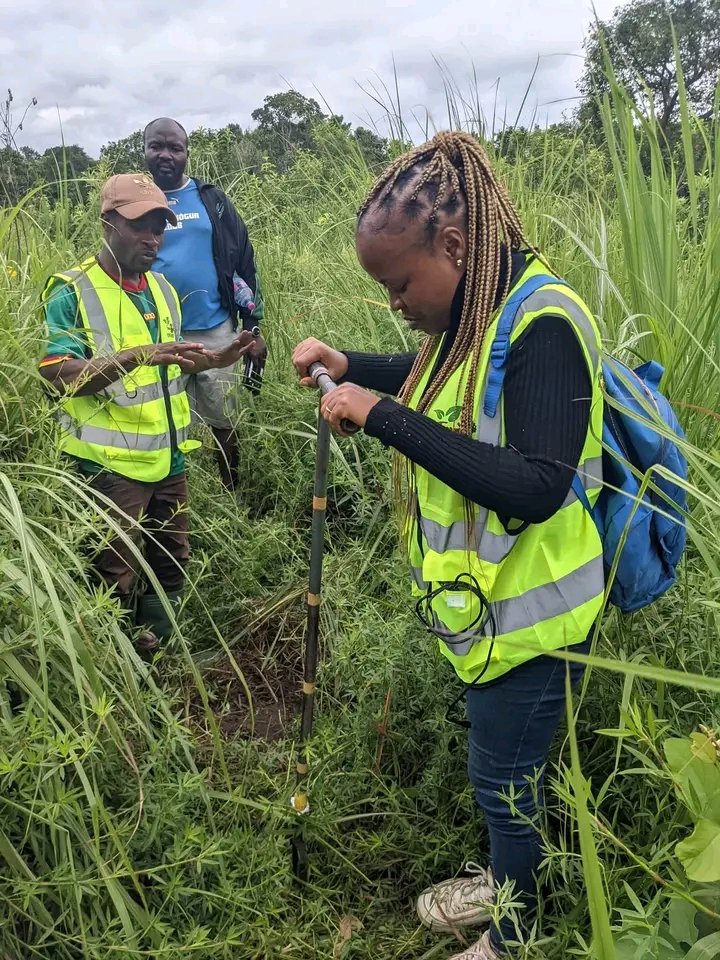
The STONEFARMS mission in Ntui was designed to go beyond simply collecting soil samples. It involved field reconnaissance, identification of representative sampling areas, systematic soil sampling, observation of landscape and soil characteristics, and technical documentation of the agricultural environment. This approach allows soil information to be interpreted within its actual field context.
A Multidisciplinary Technical Approach
The mission was carried out by a multidisciplinary team combining complementary areas of expertise:
Dr. Fouapon Yap Hassan — Pedochemist & Soil Laboratory Expert
Specialist in soil chemistry and laboratory-based soil assessment, contributing to the scientific interpretation of soil properties and analytical requirements.
Dr. Guepi Joseph — Soil Cartographer
Responsible for the spatial perspective of the assessment, contributing expertise in soil mapping, spatial characterization and understanding variations across the agricultural landscape.
Ing. Mengetoh Promise Janvier — Soil Scientist
Contributing expertise in soil characterization, field assessment and interpretation of soil conditions in relation to agricultural production.
Ing. Nkemofa Godwill F. — Agroecologist & Environmentalist
Contributing an agroecological and environmental perspective, linking soil characteristics with crop production, resource management, ecosystem sustainability and responsible agricultural development. Together, the team applied an integrated approach designed to provide a more comprehensive understanding of the land.
From Field Sampling to Scientific Interpretation
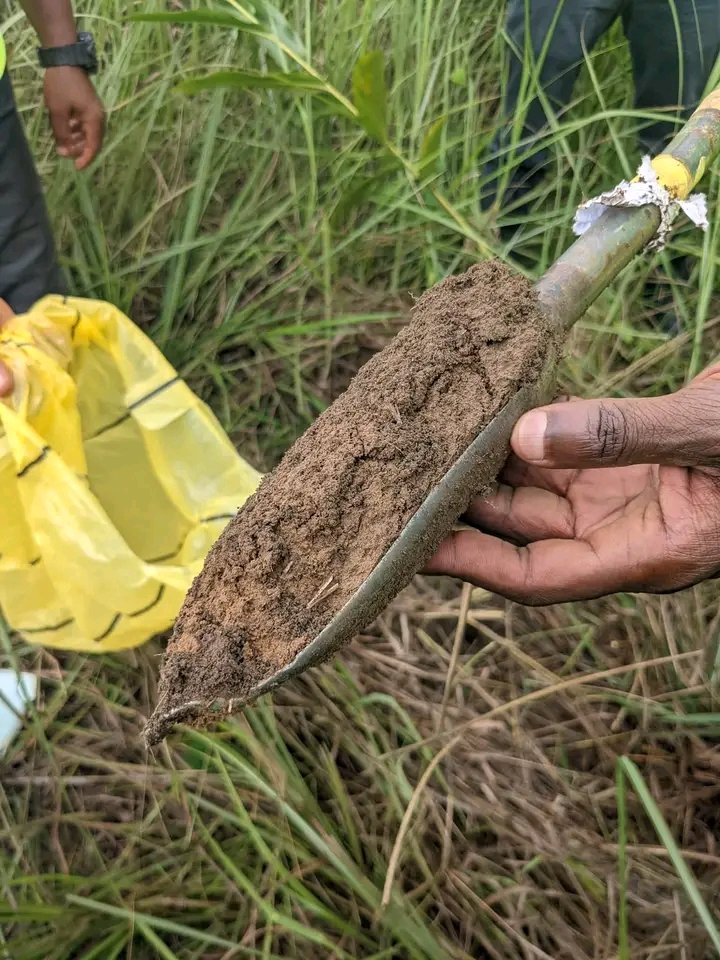
A quality soil assessment begins with the quality of the field sampling process. During the mission, representative soil samples were collected following a structured field approach designed to capture relevant variations within the assessed agricultural areas.
Field observations were also considered alongside the sampling process to provide contextual information for subsequent interpretation. The collected samples form the basis for laboratory analysis and subsequent technical recommendations. The overall objective is not simply to produce laboratory figures, but to transform soil data into actionable agricultural intelligence.
Supporting Better Agricultural Planning
Reliable soil information can provide an important foundation for decisions concerning:
- Crop and varietal suitability
- Soil fertility management
- Fertilizer requirements and application strategies
- Soil amendment requirements
- Soil conservation and erosion management
- Water and moisture management
- Sustainable land-use planning
- Long-term productivity management
For an agricultural enterprise, these decisions can have significant implications for both productivity and resource efficiency. By understanding the soil before making major production decisions, farmers and agricultural investors can reduce uncertainty and develop management strategies that are better adapted to the land.
Beyond Soil Analysis: Building Sustainable Agricultural Systems
At STONEFARMS, soil analysis is viewed as one component of a broader agricultural decision-making system. Our approach integrates soil science, agronomy, agroecology and environmental considerations to support agricultural projects from the early planning stage through implementation and management.
This is particularly important in the context of modern agriculture, where productivity must increasingly be balanced with:
- Resource efficiency
- Soil health
- Environmental protection
- Climate resilience
- Economic viability
The ultimate objective is to help transform agricultural land into productive, resilient and sustainable farming systems.
STONEFARMS: Science at the Foundation of Agriculture
The Ntui mission reflects STONEFARMS’ broader commitment to providing professional agricultural and environmental services grounded in field evidence and scientific knowledge. From soil assessment and agronomic consultancy to agricultural project development and agroecological planning, our work is guided by a simple principle:
Better agricultural decisions begin with better understanding of the land.
The collaboration with JK Agrofarms provided another opportunity for STONEFARMS to apply this principle in a real agricultural development context. We remain committed to supporting farmers, agricultural enterprises, investors and development partners with technical solutions that contribute to productive, profitable and environmentally responsible agriculture in Cameroon and beyond.
STONEFARMS – Soil Analyst in Cameroon, African. For agricultural consultancy, soil assessment, feasibility studies and sustainable farm development. Building better farms through science, sustainability and innovation.
Agriculture • Agroecology • Soil Science • Environmental Management • Sustainable Development
Leave a Reply